This document is provided for general informational purposes only and does not constitute legal, tax, accounting, insurance, brokerage, risk management, or other professional advice. You should consult your own legal counsel or other qualified professional advisors regarding your specific circumstances, and receipt of this document does not create any client, advisory, fiduciary, brokerage, or other professional relationship with Alliant Insurance Services, Inc. This document is provided “as is” without warranty of any kind, and Alliant Insurance Services, Inc. disclaims any liability for any loss or damage arising out of or relating to reliance on this document.
Podcast
Emerging Data Center Risks: Grid Disturbances, Business Interruptions, Cyber Liability & State Regulations
By Alliant Specialty Claims & Legal
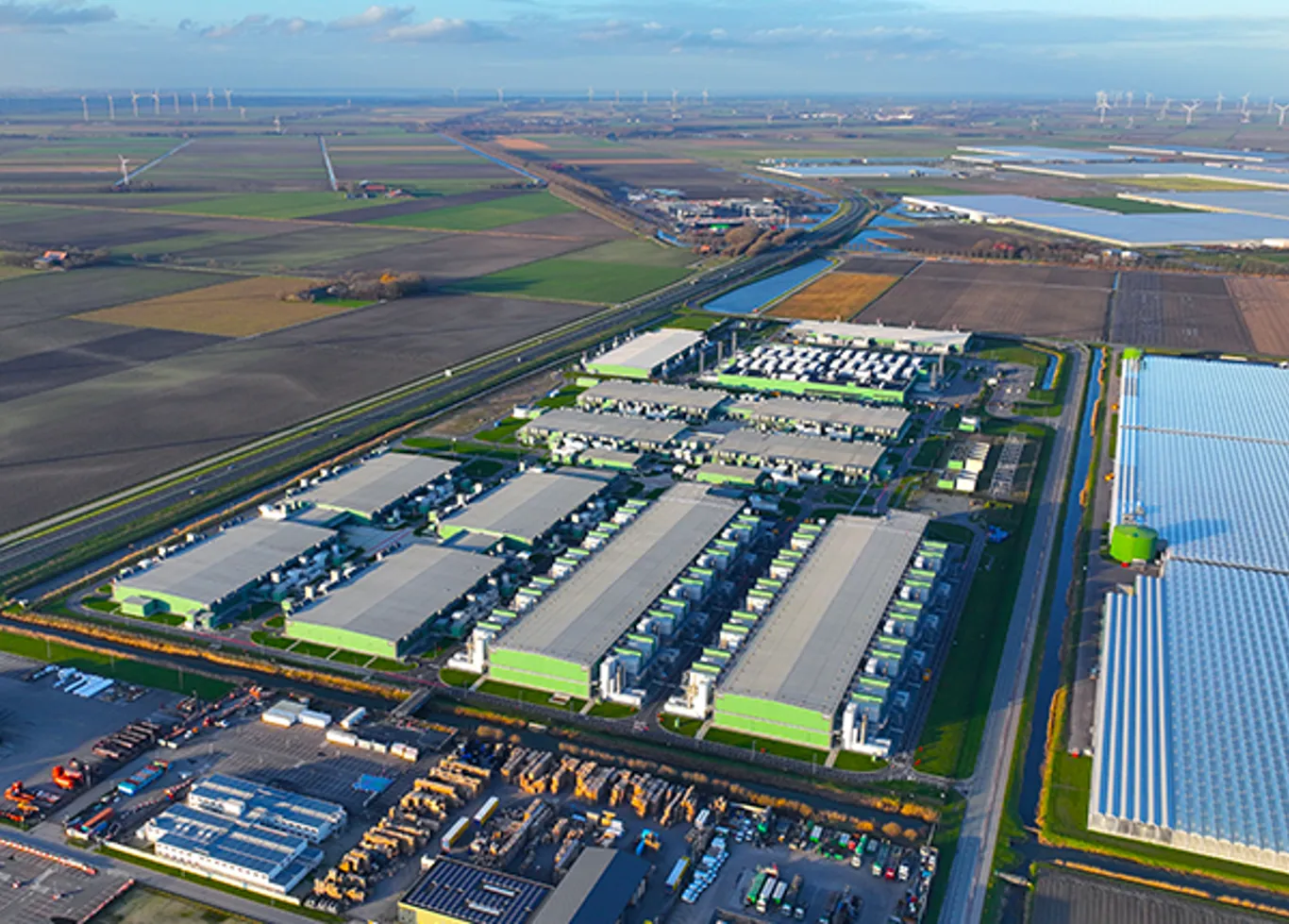
Are hyperscale AI-fueled data centers creating the next wave of executive liability, cyber risk and coverage disputes?
In this special edition of the Alliant Specialty Podcast, Mike Radak and David Finz, Alliant Specialty Claims & Legal, explain how data centers are drawing increased scrutiny over energy and water use, emissions and local infrastructure. Mike highlights PJM and FERC scrutiny after a Virginia data center shifted its load to backup power and outlines growing state mandates, including Pennsylvania’s order requiring binding commitments on energy affordability. David explores New York’s executive order pausing hyperscale data center construction for up to one year and discusses cyber liability considerations, business interruption implications and potential data center exclusions that could create coverage gaps.
Find us on Apple Podcasts, Spotify & YouTube
Welcome (00:00):
Welcome to the Alliant Specialty Podcast, your source for insights on emerging risks, market trends, and specialty insurance solutions.
Mike Radak (00:09):
Hi, everybody. Today, we are doing a special edition of the Alliant Specialty Claims and Legal Podcast as we wanted to address the rapidly growing insurance and business issue surrounding implications of Data centers. I'm Mike Radak. I lead Alliant's Specialty Claims and Legal Team. I'm joined by David Finz, our in-house Cyber and Insurance expert who will be talking with us as well. So as companies have a rapidly growing need for higher data storage and usage, and as AI continues to become more and more prevalent as a mandatory business tool that we're all using on a daily basis, and which consumes significant computing and data resources. The issues surrounding data centers are becoming very real and critical to business and insurance considerations. Data centers are moving from an economic development story into a test of who bears the cost of the risk of power, water, emissions, and local infrastructure that is required for data center usage.
Mike Radak (01:17):
That shift is creating a fast growing mix of regulatory scrutiny, approval challenges, and potential financial lines claims implications. The question is no longer just whether a data center can get built. It is whether it can secure reliable power, water, obtain durable approvals, meet what it promised regulators and investors, and do all of that without shifting unexpected costs to the community. Those issues, not unexpectedly, can all become D&O, E&O, Cyber, and other insurance claims. So, you know, one example I wanted to talk about that I feel is relevant and kind of demonstrates what is kind of a microcosm of what we see and what we're expecting to see surrounding data centers is FERC. FERC is the federal regulator that oversees parts of the interstate power system and many of the rules that the grid distributors must follow. So there is a company called PJM, which is a regional organization that coordinates the electricity grid and power markets across much of the mid-Atlantic.
Mike Radak (02:20):
As we know, data centers need large amounts of electricity around the clock. Utilities and grid operators have to figure out how to connect them, keep them reliable, and decide who pays for that power and the grid upgrades. In July of this year, there were several gigawatts of data center load in Virginia that disconnected from the grid and shifted to backup power after a disturbance. PGM said that the event did not create an unresolvable reliability problem, but it is considering rules that would require large loads to stay connected through certain grid disturbances. Those rules were still proposals as of the most recent materials that I reviewed, but we know data centers can affect the reliability of the grid they depend on and not just consume a lot of electricity. So regulators and grid operators are working out what they must do to manage grid stress and who bears the cost of keeping those services reliable.
Mike Radak (03:12):
So what does this all mean from the insurance perspective? You know, with these issues that we're seeing surrounding data centers, we can expect that D&O exposure may arise from oversight and disclosure of power availability, load forecast, cost commitments and project economics. We can expect E&O exposure to result from interconnection, energy, engineering and load forecasting services. And, you know, the reliability of these systems can trigger all sorts of potential insurance implications, not just limited to D&O and E&O. So we are seeing state rules turning these issues into enforceable obligations. Pennsylvania, for example, issued an executive order that calls for binding commitments on energy affordability, environmental protection, transparency, and community engagement for all data centers, requires energy and water use reporting for data centers. And those requirements can also affect the eligibility for a potential tax exemption for those data centers. Virginia imposed a very similar law as well. And David, I know you were going to talk to us a little bit about what New York is doing around this.
David Finz (04:25):
That's right. Thanks, Mike. And, you know, New York, for those of us who live here, think it is the center of the universe, but regardless, it's indicative of what we are seeing in many states. And so I mentioned New York specifically just because this was a very aggressive executive order that was issued by the governor back in July. It is essentially a moratorium on the construction of new data centers. It applies to what are called hyperscale data centers that consume at least 50 megawatts or more of power. And it temporarily pauses all state environmental and discretionary permits for up to one year. It gives the state agencies time to establish a regulatory framework that will address some of these issues that you just mentioned, Mike, around grid capacity, the impact on utility bills, water consumption, noise pollution. The developers are being asked now to contribute funds towards preserving local community infrastructure.
David Finz (05:28):
And the governor is also working with lawmakers to eliminate state and local tax exemptions and other economic development incentives for these massive projects. Now, you know, the risk of getting political, this obviously creates an urban rural divide because the rural communities where these data centers are located are most directly impacted. So from an environmental standpoint, that concerns them. But in addition to that, you have the question of job creation, construction jobs and jobs at the facility itself. So this is obviously a hot button political issue, but once these data centers get established, you also have to consider the cyber liability that could result. So companies are relying on these data centers for storage of their information and being able to access it and retrieve it. Apart from the data security issue, there is also the question of business interruption. Mike, you just mentioned before about one data center having to resort to backup power because of a surge in electrical usage or brownout.
David Finz (06:36):
Well, what happens when there is a business interruption that prevents a company from being able to access that data and their downstream customers are impacted and there's a loss of income? Who is responsible for that and how does insurance respond? That is a dependent or contingent business interruption. And the question remains, will the underwriters look at this and treat this data center phenomenon as yet another pillar of critical infrastructure that they want to exclude or limit coverage around? And if that is the case, we could find companies that have become dependent upon these data centers with a potential gap in coverage that brokers will need to address. So with that, I'll turn it back over to you, Mike.
Mike Radak (07:20):
Yeah, thanks, David. I mean, these issues are not going away. I can guarantee that, particularly with, you know, the increasing need for computing capacity and data storage. We will continue to watch this, particularly we'll keep a very close eye on any data center related exclusions as you just mentioned. That would be concerning to me as the way I see it. Most all of the policies that we deal with, be it D&O, E&O, or Cyber, are already equipped to handle business interruption for prolonged outage and well-equipped to handle most of these potential D&O and E&O scenarios that we discussed earlier. So, you know, we will continue to keep a close eye on this, but it is critically important issue as we go forward and as data centers become a bigger and bigger part of our lives. So with that said, thank you, David. Thanks everybody for spending a few minutes with us today to listen to us talk about insurance and data centers.
Mike Radak (08:14):
If you would like to learn more about these or any other issues within the insurance industry and the financial lines insurance industry in particular, please reach out and we can get you subscribed to our Executive Liability Insights monthly newsletter. And as always, if you'd like more information on Alliant and a more rewarding way to manage your risk, please visit our website at www.alliant.com.
Thanks for your message.
We’ll be in touch shortly
News & Resources